Soften the lights
Lower brighter lamps and switch to warmer light to help the room feel calmer as the evening progresses.
A gentle, educational walkthrough of an evening wind-down, designed to help you set the day aside and move toward a calmer, more restful night.
A predictable wind-down gives your mind and surroundings a clear signal that the day is closing. The ideas below are general and educational, meant to support everyday well-being. Treat them as a flexible menu rather than a fixed schedule, and keep only the steps that feel natural to you.
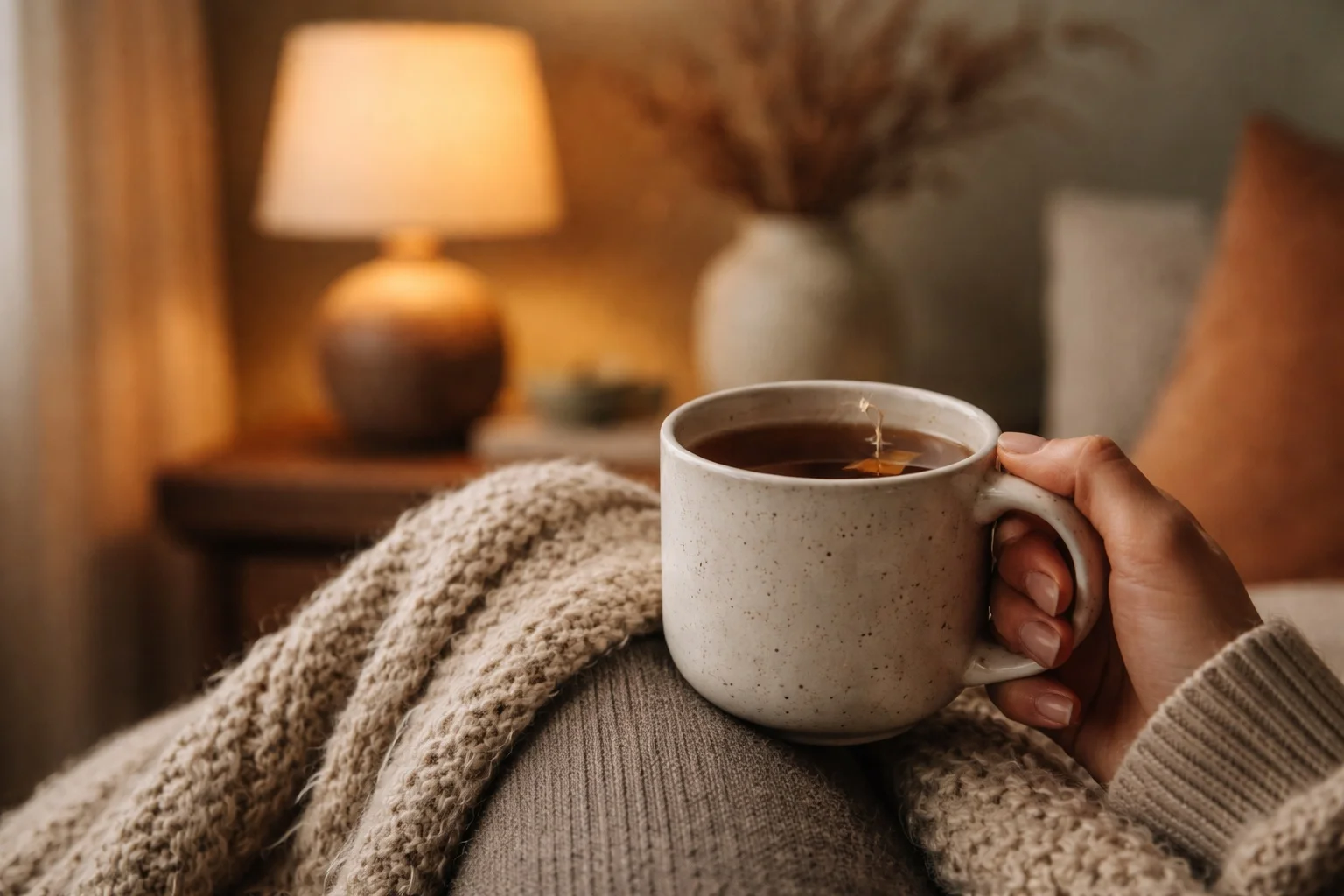
Move through these stages at your own pace, adjusting the order and timing to suit your evening.
Lower brighter lamps and switch to warmer light to help the room feel calmer as the evening progresses.
A quick reset of the space and laying out what you need for the morning can ease lingering mental clutter.
Set devices aside and choose a quieter activity such as reading or listening to something gentle.
Light stretching or slow, comfortable breathing can be a pleasant way to release the tension of the day.
Write down any tasks or thoughts so you can set them aside and return to them with a fresh start.
When you feel ready, move to a cool, quiet room and let yourself rest without pressure or expectation.
Some evenings flow easily and others do not, and that is perfectly normal. A recovery mindset means returning gently to your routine the next day rather than judging a single night.
Everyone's evenings look different, so a guide can only go so far. In our coaching sessions we help you adapt these general steps into a sequence that genuinely fits your home, your schedule and your preferences.
You can pair this guide with our sleep hygiene best practices for a fuller picture, or contact us to talk through a personalized plan together.
Share a little about your current evenings and we will explore practical, friendly adjustments together. Reach out whenever you are ready.
Start a conversationAll materials and practices presented are for educational and informational purposes only and are intended to support general well-being. They do not constitute medical diagnosis, treatment, or advice. Before applying any practice, especially if you have chronic conditions, consult a qualified healthcare professional.